
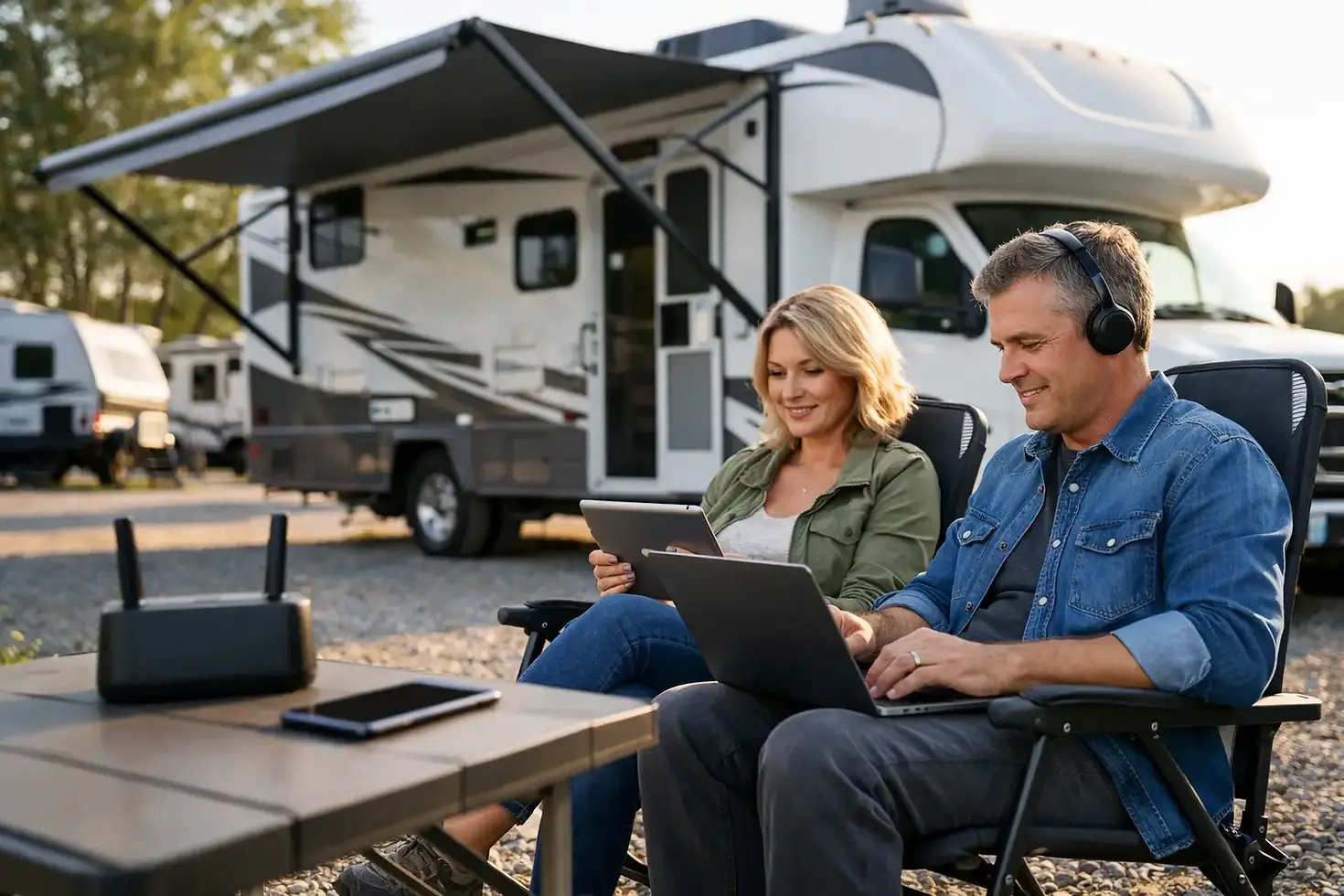
RV Travelers Needing Reliable WiFi: What Matters
A rainy afternoon at the campground can quickly reveal whether the internet is truly useful. If you need to join a work call, stream a movie with the family, check in with home, or upload photos before heading out to the beach, weak WiFi can turn a relaxing stay into a frustrating one. For RV travelers needing reliable WiFi, the difference is not just having a network name available - it is having a connection that works where and when you need it.
Reliable campground internet has become part of a comfortable RV stay, right alongside full hookups, clean facilities, and a site with room to settle in. Whether you are traveling for a long weekend, spending the winter on the Gulf Coast, or mixing remote work with a little Country Salt Life, it pays to know what to expect before you book.
Why Reliable WiFi Matters More on the Road
Many RV travelers use WiFi for much more than scrolling through social media. A dependable connection helps guests check weather radar before a beach day, map the next stop, make reservations, video chat with family, manage a business, attend school online, and stream entertainment after dinner. For seasonal guests and snowbirds, it can also make an RV site feel much more like home.
The need is especially clear for travelers who work remotely. A spotty signal can interrupt a client call or make a simple file upload take far longer than it should. But even guests who are fully off the clock appreciate being able to look up local restaurants, share a sunset photo, or watch a ballgame without using up every bit of their mobile data.
That said, reliable WiFi does not mean every guest has identical needs. A couple checking email has very different expectations than a family streaming on several devices or a remote worker handling video meetings. Knowing your own internet habits helps you choose the right campground and prepare a backup plan when needed.
What RV Travelers Needing Reliable WiFi Should Ask
Campground WiFi descriptions can sound similar, but the details matter. Before reserving a site, ask whether the park offers fiber internet, how widely the signal reaches across the property, and whether guests commonly use it for streaming or work. A park that treats WiFi as a real amenity should be able to explain what type of service it provides.
It is also worth asking how the network performs during busy periods. Internet can slow down when a campground is full and many guests are online at once. A well-managed system with sufficient capacity is better positioned to handle evening streaming, weekend traffic, and the added demand of holiday stays.
Your site location can matter, too. WiFi signals may be stronger near the office, clubhouse, or central areas than at the far edge of a large property. This does not mean a quieter site is a poor choice, but it is a practical question to ask if your work schedule depends on a stable connection.
If you have a big presentation, virtual appointment, or deadline during your stay, let the campground know before arrival. Friendly hosts who understand RV life can often help you select a site or point you toward the best place on the property to work comfortably.
Fiber WiFi Is a Meaningful Advantage
Not all campground internet is built the same. Older systems may rely on limited connections that struggle when many guests are online. Fiber WiFi generally provides a much stronger foundation because it can deliver higher speeds and more capacity than many traditional setups.
For guests, that can mean quicker page loads, more dependable video calls, smoother streaming, and less time waiting for uploads. Of course, real-world performance still depends on network design, device quality, distance from access points, weather, and the number of people using the service. No campground can promise that every device will perform exactly the same at every hour.
Still, a park that has invested in fast fiber WiFi is making a clear commitment to modern traveler needs. It is a practical amenity for guests who want peaceful camping without feeling disconnected from the people and responsibilities back home.
At Bay Hide Away RV Park & Campground, fast fiber WiFi is part of a stay designed around comfort. Guests can enjoy a quiet, off-the-road setting while remaining close to Bay St. Louis beaches, shopping, casinos, and easy routes for Gulf Coast exploring.
Set Yourself Up for a Better Connection
A few simple habits can make campground WiFi work better during your stay. Start by connecting only the devices you are actively using. Phones, tablets, smart TVs, laptops, and gaming devices can all compete for bandwidth, particularly when several people are traveling together.
When possible, schedule data-heavy tasks for quieter times of day. Download maps, movies, podcasts, or work files in advance rather than waiting until evening, when more campers may be streaming. If you are working from the RV, close cloud apps and background updates that quietly use data while you are on a call.
Where you park inside the RV can make a difference as well. Metal framing, tinted windows, and the position of your router can weaken a wireless signal. Moving your laptop closer to a window or changing where you sit may improve a connection more than you expect.
For travelers who depend on internet for income, a backup is a smart part of trip planning. Many full-time RVers carry a mobile hotspot, use a phone plan with hotspot data, or have service from more than one carrier. Campground WiFi can be excellent, but cellular coverage varies by location, terrain, and carrier. Having options offers peace of mind when a meeting cannot wait.
WiFi Should Support the Trip, Not Replace It
The goal of dependable internet is not to keep you indoors all day. It is to make the rest of your trip easier. You can confirm dinner plans, check the forecast, take care of work, and then get back to the pool, the playground, a campground cookout, or an afternoon in Old Town Bay St. Louis.
This balance matters on the Mississippi Gulf Coast. A reliable connection gives you the flexibility to extend a stay, answer an email, or keep up with family, while the area gives you plenty of reasons to put the phone down. From coastal drives and local seafood to day trips toward New Orleans, a well-located RV park can serve as both a comfortable base camp and a welcome place to recharge.
For longer stays, look beyond internet alone. Full hookups, spacious big-rig-friendly sites, laundry access, a clean bathhouse, propane service, and areas to relax all help make day-to-day RV living easier. WiFi is most valuable when it is part of a campground experience that respects your time and makes you feel cared for.
A Quick Booking Checklist
Before booking, think through how you will use the connection. If your needs are simple, dependable WiFi for browsing, messages, and planning may be all you need. If you work remotely or travel with several streamers, ask more specific questions about service type, site coverage, and peak-time performance.
Also consider the trip you want to have. A campground with reliable internet, a peaceful atmosphere, and easy access to Gulf Coast attractions gives you more freedom to choose your pace. You can take a work call in the morning, spend the afternoon at the beach, and return to a roomy site without feeling like you have compromised on either convenience or relaxation.
A good RV stay should leave room for both connection and escape. Choose a campground that takes WiFi seriously, bring a backup if your schedule demands it, and give yourself the freedom to enjoy the road without losing touch with what matters.


Comments