
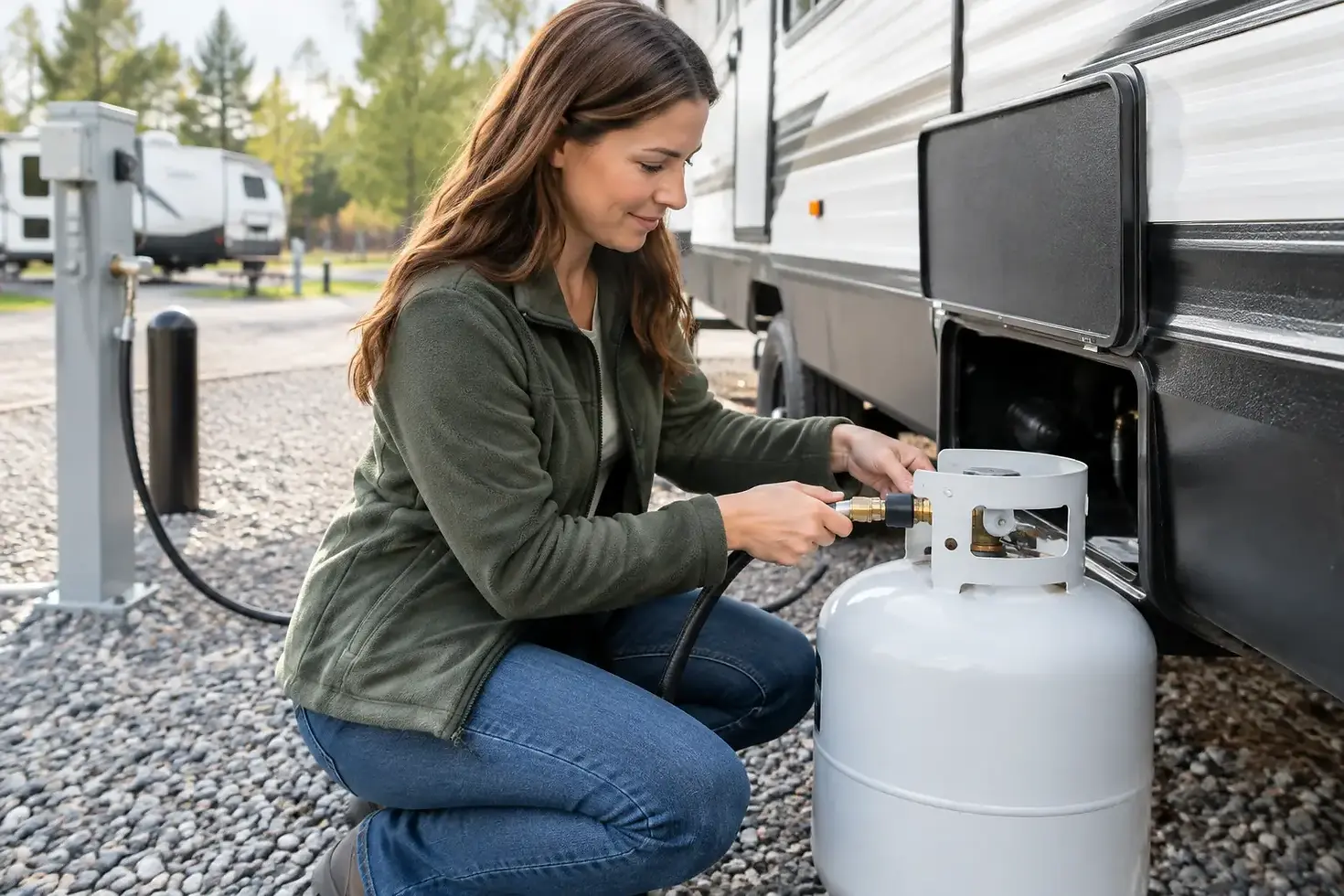
How to Fill RV Propane Safely at the Campground
A cold shower, a stove burner that will not light, and a furnace that quits after sunset are all common signs your propane supply has run low. Knowing how to fill RV propane before you are parked for the night keeps a small chore from interrupting a great camping trip. Whether you are traveling the Mississippi Gulf Coast for a long weekend or settling in for snowbird season, propane is one of the supplies worth keeping an eye on.
Most RVers do not fill propane themselves. A trained attendant at a campground, RV park, fuel station, or propane supplier performs the fill using the proper equipment. Your job is to arrive prepared, follow safety directions, and understand how much propane your RV tank can safely hold.
Know Which RV Propane Tank You Have
Your RV will usually have one of two propane setups: removable cylinders or a permanently mounted ASME tank. The difference matters because it affects where and how you refill.
Travel trailers, fifth wheels, pop-ups, and many smaller motorhomes commonly use removable DOT cylinders. These are the upright tanks mounted on the trailer tongue or stored in an exterior compartment. Common sizes include 20-pound, 30-pound, and 40-pound cylinders. A 20-pound cylinder is often called a grill tank, although RV tanks may have a different connection and are built for regular travel use.
Many Class A motorhomes and some Class C motorhomes have an ASME tank permanently mounted beneath the coach. It stays attached to the RV and is filled through an exterior service connection. You drive the motorhome to the propane station rather than removing the tank.
Look for the tank label, its capacity, and its current condition before heading to a fill station. A rusty, heavily damaged, leaking, or out-of-date cylinder may not be eligible for filling. If you smell propane, hear a hissing sound, or see damage around the valve, turn off the supply if it is safe to do so and have the tank inspected by a qualified propane professional.
When to Refill RV Propane
Do not wait until every appliance stops working. Propane levels can be harder to judge than water or battery levels, especially on a busy travel day. The best time to refill is when you still have enough fuel for normal use while you make your way to a reliable fill station.
Many RVers refill at roughly one-quarter full. That cushion is especially helpful during cooler weather, when the furnace can use far more propane than expected. A quick overnight in mild weather may barely touch your supply, while several chilly nights, frequent cooking, and a propane water heater can drain a tank quickly.
Your RV may have a built-in gauge, a tank monitor, or a simple analog dial. These are useful guides, but they are not always exact. For removable cylinders, you can also estimate remaining fuel by weight. Propane cylinders are stamped with a tare weight, or TW, which is the weight of the empty cylinder. A full 20-pound cylinder weighs about 37 to 38 pounds, depending on the tank itself.
Before a long weekend, a holiday stay, or a stretch of cooler Gulf Coast weather, refill early. You will have more options during business hours than after dark when many propane stations are closed.
How to Fill RV Propane at a Fill Station
The actual filling is quick, but the process begins with safe preparation. Call ahead when possible to confirm that a location fills RV propane and to ask about service hours. Some places exchange portable tanks but do not fill RV cylinders or motorhome-mounted tanks.
When you arrive, pull into the designated propane area and wait for the attendant's instructions. Keep your RV positioned so the fill connection is accessible. For a motorhome, that usually means the service side of the coach needs to be near the pump. For portable cylinders, carry or roll them upright to the attendant unless the facility tells you otherwise.
Before filling begins, turn off all propane appliances. Extinguish pilot lights, shut off the RV furnace, water heater, refrigerator if it is running on propane, stove, and outdoor cooking equipment. Turn off your engine and generator as directed. Everyone should step away from the filling area, and there should be no smoking, open flames, or spark-producing activity nearby.
The attendant will inspect the tank valve and certification markings, connect the filling hose, and fill the tank to the proper level. Propane is not filled to 100 percent capacity. Cylinders and ASME tanks are generally filled to about 80 percent to allow room for the liquid propane to expand as temperatures change. That empty space is a safety feature, not a short fill.
Once filling is complete, the attendant disconnects the hose, closes the valve, and checks for leaks. Confirm that your valve cap is in place and that the tank is secured before you leave. If you have removable cylinders, transport them upright and secured in their approved RV storage location, never loose inside the living area or tow vehicle.
What to Bring and What to Check First
A propane stop goes faster when you have the basics handled before pulling in. Bring a payment method, know your tank size, and have access to the fill valve or cylinder compartment. If your tank is behind a locked door, unlock it before the attendant arrives.
For portable cylinders, check that the protective cap is removed from the valve only when it is time to fill. Keep the cylinder upright. Do not try to modify fittings, force a damaged valve, or use tape to address a suspected leak. Those are reasons to stop and get professional help.
For a motorhome-mounted tank, inspect the exterior fill connection and make sure nothing blocks access. Tell the attendant if you have noticed a propane odor, a gauge that behaves strangely, or an appliance that has been difficult to light. A fill station can provide fuel, but a persistent system issue may require an RV service technician.
Refill vs. Exchange: Which Is Better for RVers?
Tank exchanges are convenient for standard 20-pound cylinders, especially when you are traveling through an area without a dedicated propane fill station. You hand over an empty tank and receive a filled replacement. The trade-off is that exchange tanks are often filled with less propane than their maximum allowable amount, and the cost per gallon can be higher.
A refill station is often the better value when available, particularly for 30-pound and 40-pound RV cylinders or any permanently mounted motorhome tank. You pay for the propane added, keep your own tank, and can usually receive the proper 80 percent fill. It also saves you from needing to match the age, condition, and connection style of your RV cylinder to an exchange program.
It depends on your route and your tank setup. An exchange can be a practical backup for a single 20-pound cylinder. For most RV travelers, a dependable propane fill station is the more useful option.
Propane Safety Habits That Pay Off
Propane is safe when it is handled correctly, but it deserves respect. Make a quick propane check part of your arrival and departure routine. Ensure cylinders are upright and firmly secured, the service valve is closed when appropriate, and the compartment is clear of loose gear that could damage hoses or fittings.
Inside the RV, keep working propane and carbon monoxide detectors. Test them regularly and replace batteries as needed. If you smell propane, do not operate electrical switches, start the engine, light a match, or use a phone near the RV. Shut off the propane supply if safe, move everyone away from the area, and contact campground staff or emergency services for guidance.
A propane tank should never be stored inside your RV, vehicle, tent, or enclosed building. Heat and poor ventilation create unnecessary risk. During hot weather, avoid leaving portable cylinders in direct sun for long periods when a shaded, ventilated storage area is available.
Make Propane Part of Your Travel Routine
The easiest way to avoid a propane interruption is to think ahead before the tank is low. Check your gauge when you set up at camp, again before a cool night, and before you leave for your next destination. If your route includes a full-service RV park, ask at check-in about propane service hours rather than waiting for the last tank reading.
At Bay Hide Away RV Park & Campground, the goal is to make Gulf Coast camping feel comfortable from the moment you pull into your site. Keeping your propane supply ready means more time enjoying a warm shower, an easy meal, and a relaxed evening under the Mississippi sky.


Comments