
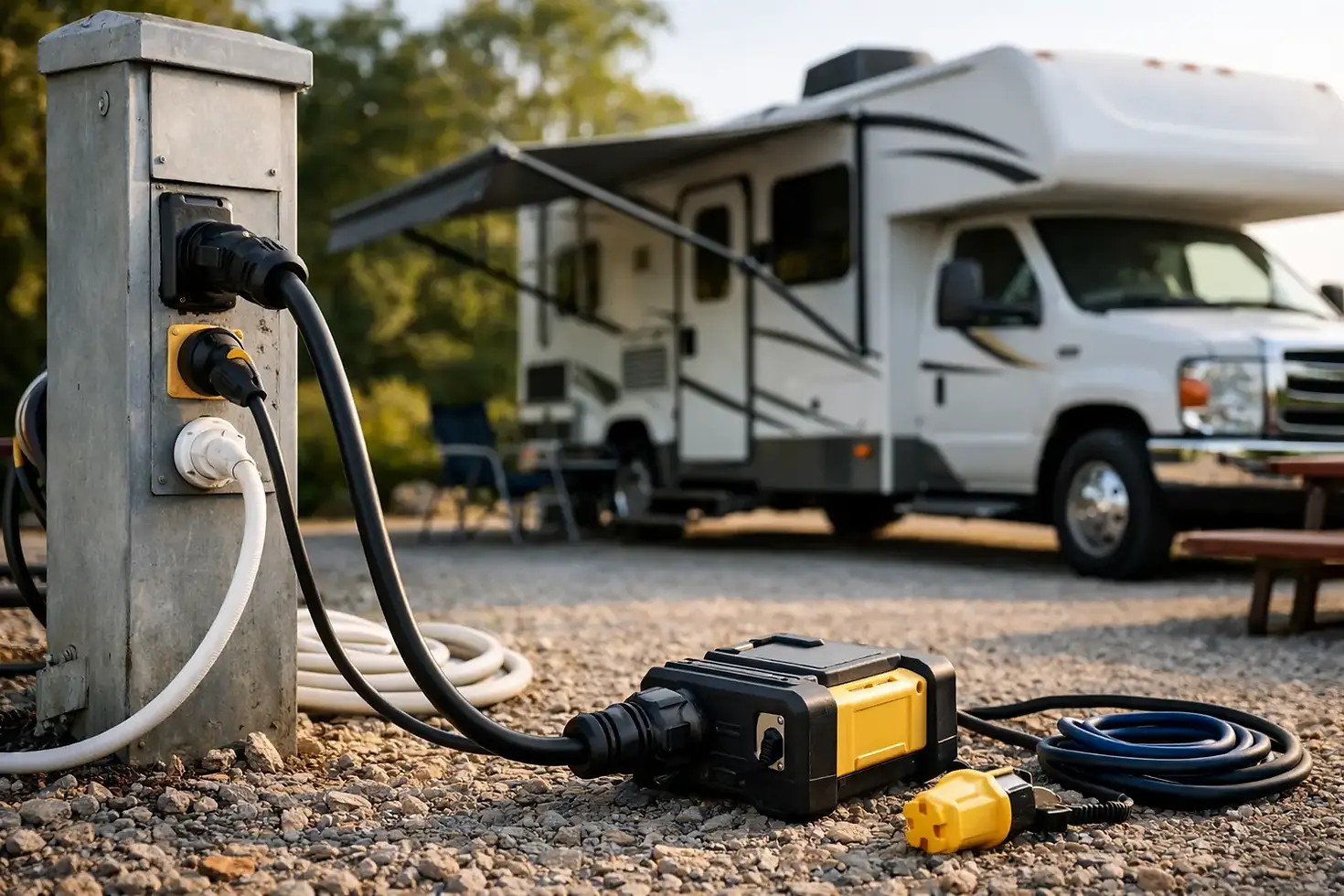
Guide to Campsite Electrical Setup for RVs
A great RV stay starts before the awning goes out and the grill gets warm. Connecting to shore power is usually quick, but a rushed hookup can lead to tripped breakers, damaged appliances, or an evening spent troubleshooting instead of relaxing. This guide to campsite electrical setup walks through the practical steps that help RV travelers connect safely and settle in with confidence.
At a well-maintained full-hookup site, electricity should feel simple. Still, every RV and every campground pedestal deserves a quick check. Taking a few extra minutes protects the systems that make your coach feel like home - air conditioning, refrigerator, water heater, chargers, and all the comforts that make Gulf Coast camping easy.
Start With Your RV's Electrical Needs
Before choosing an outlet, know whether your RV uses 30-amp or 50-amp service. A 30-amp RV uses a three-prong plug and has a maximum capacity of 3,600 watts at 120 volts. A 50-amp RV uses a four-prong plug and has two 120-volt hot legs. It can provide much more available power, which is why many larger fifth wheels and motorhomes use 50-amp service.
The number on the plug matters. A 50-amp RV can use a 30-amp pedestal outlet with the correct dogbone adapter, but it will only receive 30-amp capacity. That may be fine for a mild-weather overnight stop, but it requires some power management. Running two air conditioners, a microwave, and an electric water heater at once is likely to trip the pedestal breaker.
A 30-amp RV can also connect to a 50-amp outlet with a proper adapter. The adapter does not turn your RV into a 50-amp rig. Your RV's main breaker still limits the power entering the coach. Use adapters designed for RV use, keep them in good condition, and avoid makeshift household extension cords or plug combinations.
Inspect the Campsite Power Pedestal First
Pull into your site, level the RV, and position it before connecting electricity. Once you are ready to hook up, look over the pedestal with the breaker switched off. You are checking for obvious concerns: cracked outlet covers, exposed wiring, burn marks, moisture inside the outlet, loose receptacles, or signs of overheating.
A clean, intact pedestal is a good sign, but it does not tell you whether voltage is safe. Campground voltage can change as demand rises, especially on hot afternoons when many guests are running air conditioners. Low voltage can be hard on air-conditioning compressors and other electrical equipment, while a wiring fault or surge can cause more immediate damage.
An electrical management system, often called an EMS or surge protector, is one of the best pieces of gear an RV owner can carry. Basic surge protectors help guard against voltage spikes. A quality EMS does more by checking for low or high voltage, open neutrals, reverse polarity, and other unsafe conditions before it allows power into the RV.
Connect your protector to the pedestal first, then let it complete its test cycle. If it reports a fault, leave the RV unplugged and contact the campground office. Do not try to repair a pedestal yourself or work around a warning with an adapter. A helpful campground team would rather address the issue early than have a guest deal with an electrical problem later.
The Right Order for a Safe Connection
A consistent hookup routine removes guesswork. With the pedestal breaker off, plug your EMS or surge protector into the correct outlet. Connect your RV's shore power cord to the protector, making sure the plug is fully seated and the connection is dry. Then turn on the breaker at the pedestal.
Give your power management device time to test the connection. If all readings are normal, power will pass through to the RV. Step inside and check your control panel, outlets, and refrigerator to confirm you have power. It is normal for some RV systems to have a short delay before they begin operating.
When it is time to leave, reverse the process. Turn off the pedestal breaker first, then unplug the RV cord, then remove the surge protector. This order helps reduce arcing at the plug and keeps your connections in better shape over time. Store cords with the ends capped or protected from dirt and rain.
Manage Your Load, Especially on 30 Amps
The most common campsite electrical issue is not a bad pedestal. It is simply asking a 30-amp connection to do too much at once. Air conditioners are the biggest draw in most RVs, particularly during a Mississippi summer. Add a microwave, hair dryer, coffee maker, space heater, or electric water heater, and the breaker may do exactly what it is supposed to do: shut power off before wiring overheats.
The answer is usually simple. Run one major appliance at a time. If the air conditioner is on, switch the water heater to propane when your RV allows it. Wait to use the microwave until the coffee maker is finished. A quick glance at your RV's energy monitor, if equipped, can make this routine even easier.
Fifty-amp service gives larger rigs more breathing room, but it is not a reason to ignore load management. A loose connection, damaged cord, or overloaded circuit inside the coach can still create problems. If a breaker trips repeatedly, do not keep resetting it. Turn off appliances, identify what was running, and ask for help if the cause is not clear.
Watch for Heat, Weather, and Voltage Changes
After your RV has been connected for a little while, feel the outside of the plug and cord connection with the back of your hand. It should not be hot. A slightly warm cord during heavy use can happen, but a hot plug, melting plastic smell, discoloration, or a buzzing sound means you should disconnect safely and report the issue right away.
Keep cords off standing water whenever possible, and make sure the pedestal cover can close over the connection. RV-rated shore power equipment is built for outdoor use, but it is not meant to sit in a puddle or be used with damaged insulation. Never run a cord through a doorway or window where it can be pinched, and keep it away from driving paths and curious children.
Voltage deserves attention during peak heat. If your EMS disconnects power because voltage is too low, trust it. It is protecting expensive equipment. Turn off high-demand appliances and let the campground team know what your device is reporting. In some cases, demand across the park may settle down. In others, staff may need to inspect the site.
Tent Camping and Portable Power Need Extra Care
Tent campers should be especially cautious with electricity. A standard campground outlet is useful for a phone charger, lantern, small fan, or cooler, but tent sites are not a place for improvised high-power setups. Household extension cords are often undersized for outdoor loads and can overheat, particularly when they are coiled, covered, or exposed to rain.
If you are tent camping, use outdoor-rated cords only when permitted by the campground, keep every connection dry and elevated, and choose low-draw equipment. Space heaters, hot plates, and other heat-producing appliances are not a good fit for a tent environment. For guests who need a tent site, availability may be limited and reservations should be arranged by calling ahead.
Portable generators require the same respect. Follow campground quiet hours and site rules, keep the generator well away from tents and RV windows, and never operate it in an enclosed space. Carbon monoxide is odorless and dangerous. If shore power is available, it is usually the quieter and more comfortable choice for everyone nearby.
A Comfortable Setup Lets You Enjoy the Stay
Once power is connected safely, the campsite can become the easygoing home base it should be. Set your refrigerator to the right power source, cool the coach before the hottest part of the day, and use your appliances with your available service in mind. A little awareness goes a long way toward keeping the trip comfortable.
At Bay Hide Away RV Park & Campground, full-hookup sites, roomy accommodations, and a peaceful country setting make it easier to settle in after the drive. Whether you are heading to the beach, exploring Bay St. Louis, or enjoying a slower afternoon by the pool, dependable campsite habits help keep the focus where it belongs - on your Gulf Coast getaway.
Before the next trip, take a look at your shore power cord, adapters, and EMS. Replacing a worn component at home is far easier than chasing an electrical issue after you arrive. Then you can plug in, breathe out, and enjoy a little Country Salt Life.


Comments